
HYPERION II
FT-IR и QCL вместе
Аналитическая мощь и инновации
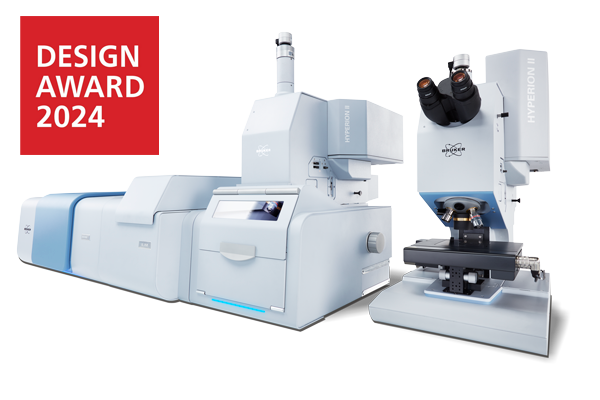
Исследовательская платформа ИК-микроскопии и визуализации
Что нового в HYPERION II:
Как мы интегрировали инфракрасную лазерную визуализацию:
Наше запатентованное снижение пространственной когерентности:
FT-IR микроскопия дополнена QCL | Инфракрасной лазерной визуализацией
HYPERION II - это инновация в инфракрасной микроскопии. Он обеспечивает ИК-визуализацию вплоть до дифракционного предела и задает новый эталон микроскопии ATR. Именно в нем впервые сочетаются FT-IR и инфракрасная лазерная визуализация (ILIM), благодаря чему в одном устройстве возможны все три режима измерения: пропускание, отражение и ATR.
Особенности HYPERION II:
- Широкий выбор детекторов для μ-FT-IR:
Широкополосные, среднеполосные, узкополосные LN2-MCT, термоэлектрически охлаждаемый (TE) MCT. - Матричный детектор для инфракрасной визуализации (64 x 64 или 128 x 128 пикселей).
- Опция спектроскопии QCL на базе модуля лазерной инфракрасной визуализации (ILIM, лазер класса 1)
- Выбор объектива: 3.5x/15x/36x/74x IR, 20x ATR, 15x GIR, 4x/40x VIS.
- Расширение спектрального диапазона – от ближнего инфракрасного (NIR) до дальнего инфракрасного (FIR)
- Выбор апертур: ручная и автоматизированная ножевая апертура. Металлические апертуры для NIR
- Выбор аксессуаров и приндлежностей для пробоподготовки: аксессуар для макро ИК-визуализации, предметный столик для охлаждения/нагрева, защитный кожух и т.д.
- Выбор устройств визуализации: подсветка Darkfield, флуоресцентная подсветка, поляризаторы VIS, ИК-поляризаторы и т.д.
HYPERION II обеспечивает:
- Идеальное соответствие спектральных и визуальных изображений. Приминимо к любому режиму измерения (включая визуализацию ATR).
- Чувствительность FT-IR микроскопии и визуализации с использованием детектора фокальной плоскости (FPA) ограничивается только дифракционным пределом.
- Первая в истории комбинация технологий FT-IR и QCL с помощью (опционально) инфракрасного лазерного модуля визуализации (ILIM, лазерный класс 1).
- Инфракрасная лазерная визуализация во всех режимах измерения (ATR, Transmission, Reflectance).
- Запатентованная функция снижения когерентности при использовании лазерной визуализации без артефактов и потери чувствительности или скорости.
- Высокая скорость визуализации:
0,1 мм2в секунду (FPA, полный спектр)
6,4 мм2 в секунду (ILIM, единичное волновое число) - Дополнительный детектор TE-MCT для проведения ИК-микроскопии с высоким пространственным разрешением и чувствительностью без использования жидкого азота.
- Возможность эмиссионной спектроскопии и дополнительное расширение спектрального диапазона.
Область применения HYPERION II:
- Наука о жизни | визуализация клеток
- Фармацевтика
- Исследования излучательной способности (LED)
- Анализ дефектов и их причин
- Криминалистика
- Микропластики
- Промышленные НИОКР
- Полимеры и пластмассы
- Исследование поверхностей
- Полупроводники
Исследовательский микроскоп FT-IR для первопроходцев и новаторов
Вряд ли другой ИК-микроскоп может вдохновить наших пользователей так, как HYPERION II:
Точный, настраиваемый, адаптируемый и всегда на пределе возможного.
Полный контроль
Прежде всего, речь идет о полном доступе к инструменту. Полный доступ к эксперименту, образцам и параметрам. Это основа HYPERION II и его самый ценное свойство - обеспечение полного контроля.
Будь то FT-IR измерения в поточечном режиме, картирование или визуализация с различными детекторами или объективами, особенностями пробоподготоки или с помощью ATR или объектива Grazing Angle. В любой момент вы можете повлиять на результат ваших измерений и сделать их лучше.
Это явное отличие от нашего ИК-микроскопа LUMOS II. Там, где LUMOS II избавляет пользователя от многочисленных настроек эксперимента и автоматизирует процесс измерения, HYPERION II остается гибким инструментом, который делает только то, что требует пользователь.

Памятник своему прошлому
Многие пользователи знают HYPERION II и его сильные стороны благодаря предшественнику. В течение почти 20 лет он был двигателем инноваций в ИК-микроскопии и визуализации. То что сделало HYPERION выдающимся FT-IR микроскопом, сохранили, сделав лучше, быстрее и совершеннее.
HYPERION II по-прежнему имеет все функции, необходимые для ежедневных исследований: жидкий азот и термоэлектрически охлаждаемые MCT, детекторы визуализации в фокальной плоскости, визуальные и инфракрасные инструменты улучшения когерентности и, конечно же, обилие специальных принадлежностей.
В результате мы хотели создать новый эталон в FT-IR-микроскопии и визуализации и соответствовать нашему званию лидера инноваций, внедряя новые и захватывающие технологии, сохраняя при этом устоявшиеся и ценные решения.

Расширение возможностей FT-IR с помощью инфракрасной лазерной визуализации (QCL)
QCL и FT-IR в одном приборе
Впервые пользователи могут получить доступ к ИК-микроскопу, который сочетает в себе технологии FT-IR и QCL в одном приборе. Таким образом, мы открываем новую дверь для наук о жизни и исследования материалов.
Зарегистрируйте спектр FT-IR, выберите колебания, которые вы хотите исследовать с помощью QCL, и создайте потрясающие химические изображения за считанные секунды.
Благодаря этому совершенно новому подходу FT-IR и инфракрасной лазерной визуализации мы, наконец, даем пользователям, исследователям и ученым инструмент для разработки новых применений, а также для улучшения устоявшихся и проверенных методов.
Настоящий микроскоп QCL с исключительной производительностью
HYPERION II предлагает бескомпромиссную сочетание QCL микроскопии с современным FT-IR микроскопом. Фактически, мы специально разработали и запатентовали новую технологию снижения когерентности, чтобы обеспечить непревзойденную производительность ИК-лазерной визуализации - без цифровой постобработки.
Для примера: в классической FT-IR спектроскопии пространственная когерентность не играет роли. Однако в ИК-микроскопических измерениях с QCL неизбежно возникают явления нарушения пространственной когерентности. Эти нуары и искажения на ИК-изображениях и спектрах, как правило, считаются дефектами химической визуализации (см. DOI: 10.1002/jbio.201800015).
Отделение химической информации образца от физической, описывающей фазовые отношения рассеянных фотонов, представляет собой непростую задачу. HYPERION II подходит к этой проблеме прагматично, решает ее с помощью интеллектуального аппаратного дизайна и позволяет получать данные химической визуализации без артефактов.
Сравнение FT-IR и QCL спектроскопии
Заявление, что оба метода могут выполнять одну и ту же задачу одинаково хорошо, - популярное заблуждение. FT-IR и инфракрасная лазерная визуализация имеют явные преимущества, и только практическая комбинация обеих позволяет достичь наилучших результатов.
Мы знаем, что большинство ученых и исследователей не хотят отказываться от универсальности FT-IR. Им не нравится ограничиваться одной передовой техникой без точки отсчета. К счастью, HYPERION II можно считать как исключительным FT-IR микроскопом, так и амбициозным микроскопом QCL.
Мы рассмотрели эту двойственность, и там, где технология QCL записывает данные значительно быстрее при одном и том же сигнале к шуму, она по-прежнему ограничена небольшим диапазоном MIR. Опять же, мы остаемся верны концепции HYPERION II. Это Ваш выбор. У Вас есть полный контроль.


Приложения для ИК-микроскопии (FPA, MCT, QCL)
Анализ биологических тканей

Материаловедение

Судебные науки

Разработка лекарственных средств

Геология и минералогия

Анализ микропластика

Energy Materials / Photonic Crystals

In the study by Arpin et al. (2013), 3D self-assembled tungsten photonic crystals retain their structure up to ~1,400 °C, while exhibiting tailored IR reflectance/emissivity spectra that show enhanced useful thermal emission and suppressed undesired IR emission.
The role of HYPERION: researchers used reflectance IR to infer spectral emissivity via Kirchhoff’s law and applied reflectance analysis to directly link to emissivity control of tungsten photonic crystals.
Nanophotonics / Bioanalytics

Amenabar et al. (2013) demonstrated infrared nanospectroscopy (nano-FT-IR) mapping of individual protein complexes (e.g. ferritin, insulin fibrils) with ~30 nm lateral resolution, interpreting local broadband spectra in the amide I/II region to deduce secondary structure at the nanoscale.
The role of HYPERION: FT-IR spectra were acquired as reference spectra and to compare peak positions and band shapes with the nano-FT-IR data, thereby supporting assignments of local secondary-structure resonances.
Plastmonics / Supercrystals

Mueller et al. synthesized three-dimensional, self-assembled gold nanoparticle “supercrystals” and demonstrated that plasmon polaritons in these crystals induce strong near-field enhancement across visible to mid-IR bands, enabling both SERS and SEIRAS of ligand molecules.
The role of HYPERION: IR reflectance and transmittance spectra on plasmonic supercrystal films where collected demonstrating coupling between plasmonic modes and molecular vibrations and quantifying SEIRAS enhancement.
On-Chip-Screening / Biomedical

In Benz et al. (2020) a dendrimer-based, patterned indium-tin-oxide (ITO) slide was used to generate >50,000 nanodroplet vessels per plate, enabling on‐chip chemical synthesis and ultra-sensitive MALDI-TOF MS, UV–Vis reaction monitoring (RM) and on-chip IR spectroscopy for RM and characterization in high-throughput drug discovery.
The role of HYPERION: IR spectra from the droplet array spots provided molecular vibrational absorption signatures to complement MS and UV-Vis data, thus supporting high-throughput characterization of the synthesized library.
Plasmonics / Metamaterials

Paggi et al. (2023) demonstrate an over-coupled metasurface resonator that enhances molecular vibrational absorption across the mid-IR range (5–10 μm) by coupling weak plasmonic modes to molecular vibrations, achieving reflectivity variations up to 1% per nanometer of molecular layer thickness.
The role of HYPERION: IR spectra in the mid-IR allowed to assess the influence of the metasurface resonator on vibrational modes, shed light onto the broadband SEIRA mechanism and supported the design of detection platforms.
Polariscopy / Nanomaterials

Honda et al. (2019) demonstrated infrared (IR) polariscopy using hyperspectral imaging with a focal plane array (FPA) detector in the IR spectral region under illumination by thermal and synchrotron light sources. They show that the time required for polariscopy at IR wavelengths can be substantially reduced by the FPA-FTIR imaging.
The role of HYPERION: Both the offline FPA-FT-IR experiments and the synchrotron based hyperspectral imaging were performed on the Hyperion enabling the analysis of the targeted sub-wavelength features via polariscopy.
Energy Materials / Metamaterials

Dyachenko et al. report the design and fabrication of a refractory multilayer metamaterial composed of tungsten and hafnium dioxide that exhibits an optical topological transition between epsilon-near-zero and hyperbolic dispersion. This transition allows control over the material’s thermal emission properties at high temperatures, enabling selective tuning of emissivity.
The role of HYPERION: Reflectance spectra were collected in the NIR region to determine the spectral position and strength of optical resonances in the multilayer structure.
Optics / IR Imaging

Stavitski et al. (2013) achieved diffraction-limited spatial resolution by coupling synchrotron infrared (IR) beamlines to focal plane array detectors (FPA), enabling full-field imaging with high chemical sensitivity and rapid acquisition times. Using this approach, they successfully map chemical composition in heterogeneous samples with spatial resolution down to approximately 5 µm.
The role of HYPERION: Equipped with an FPA detector, the HYPERION served as the imaging platform coupled to the synchrotron which was used for the chemical and compositional analysis.
Catalysis / Energy Materials

Cao et al. report using operando synchrotron radiation FT-IR (SR-FT-IR) under working potentials to detect a reversible vibrational absorption band at ~764 cm⁻¹ of an atomically dispersed Ru₁–N₄ catalyst, which they attribute to the adsorption/desorption of an oxygen intermediate (O*), thereby revealing the dynamic involvement of O species at the Ru site during catalysis.
The role of HYPERION: An operando SR-FT-IR setup was used to spatially and spectroscopically interrogate the catalyst under bias, capturing the vibrational signature of O* on the Ru site and supporting direct linkage between intermediate adsorption and catalytic function.
Catalysis / Energy Materials

In Su et al., the authors design CuO clusters supported on N-doped carbon and show that under applied potential the clusters dynamically reconstruct into Cu₂–CuN₃ species with charge asymmetry, which correlate with high Faradaic efficiency toward C₂⁺ products (notably ethanol). They combine operando XAS, quasi-in situ XPS, and operando FT-IR (with DFT support) to trace structural, electronic, and adsorbate changes in real time.
The role of HYPERION: As part of their operando FTIR setup, it was used to focus the synchrotron-based IR beam into the reaction cell and collect reflectance spectra under applied potentials. These measurements enable tracking of molecular vibrational features and charge-asymmetry signatures linked to the Cu₂–CuN₃ clusters and thus substantiate the structure–activity correlations under working conditions.
Аксессуары для ИК-отбора проб и объективы
Проверочная табличка

Держатель образца MicroVice

Аксессуар для макроображения ATR

Фильтрующий держатель

Стадия нагрева и охлаждения

Объектив 3.5x изображения

Стандартные объективы для передачи

Цель ATR

Цель угла выпаса скота

Алмазная компрессионная ячейка

OPUS Release 9.0 Highlights for HYPERION II | Q1 2025
New Feature: The Autonomous Composition Identifier (A.I.D.) simplifies search and identification.
The Autonomous Composition Identifier (A.I.D.) is an AI-driven software tool for identifying the chemical composition of samples based on IR or Raman spectral data. It incorporates the previous O/SEARCH features and adds a multi-step algorithm to find the best match from reference spectral databases, whether dealing with pure substances or complex mixtures. A.I.D. intelligently evaluates and recommends optimal matches with a balance of reliability and sensitivity—automatically generating diagnostics and visual reports, including residual spectra and hit quality graphs. It delivers high-performance results in seconds and supports in-depth, interactive analysis of alternative identifications.

New Feature: Co-local Measurement – Unified Analysis Across IR and Raman
The Co-local Measurement function, part of the OPUS/OBJECT package, enables seamless analysis of the same region of interest on microscopic samples using both IR and Raman microscopy. It allows the transfer of overview images and measurement areas between LUMOS II, HYPERION II, and SENTERRA II instruments. This ensures that IR and Raman data are collected from precisely the same spot, enabling complementary chemical insights. Co-local Measurement bridges the gap between two techniques, improving data correlation and boosting confidence in results for heterogeneous or complex samples.

Updated Feature: OPUS/OBJECT now combines "Find Particle" and "Cluster ID"
The Particle Identification function (part of the OPUS/OBJECT package) combines the power of “Find Particles” and “Cluster ID” into one streamlined workflow. It detects particles within IR and Raman chemical images, determines their dimensions, and identifies their chemical makeup—all in one go. This integrated approach simplifies analysis and accelerates decision-making for complex samples.

OPUS Release 8.7 | HYPERION II | Q3 2021
New Feature: High Performance Chemical Image Generation by New Adaptive K-means Clustering Function
This new function is the logical next development step for our well known Cluster analysis function.The Adaptive K-means Clustering Function is based on a new algorithm, which enables a non-supervised and autonomous determination of spectral variance within your imaging or mapping results.
- Forecasting or time consuming searching of the included amount of chemical classes is no longer been necessary as the algorithm can predict all included chemical classes by itself.
- This major function is important for all kind of chemical imaging and distribution analysis of unknown samples or small structures within larger datasets.
- Make analysis and evaluation is as easy as possible and safes your valuable time and nerves.
New Feature: “Cluster ID” Function for Identification of Classes in 3D Spectral Data
Our new Cluster ID function enables the identification of clusters within imaging and mapping data using the OPUS functions: spectrum search in libraries, quick compare, or identity test.
- Easy determination of the chemical identity of classified sample components for particles, layers in laminates, components of pharmaceutical tablets and other inhomogeneous materials.
- Reliable and comprehensive statistics reports about quantity, size and of course identity of all analyzed structures is provided and leads particle and technical cleanliness analysis to a new, autonomous level.
Updated Feature: "Find Particles" function now contains a novel particle detection method
The proven "Find Particle" software can now be applied to both: the visual and the IR image. With this updated feature, you are able to do particle detection based on chemical images that were measured by the LUMOS II.
- While particle recognition for low contrast structures and off-white/transparent particles/fibers on off-white filter membranes can be tedious, a postrun particle determination based on the chemical IR image allows you to determine quantity and size of particles from your imaging or mapping results.


Дополнительная литература
Узнайте больше о наших FT-IR микроскопах и решениях, загрузив связанную литературу.